Translate

Thursday, 17 July 2014

Home brew update: Its now a Dunkel weizen


Today was bottling day for my latest brew. As you may recall from my last blog posts - this was based on the successful Hefeweizen brew that i made back in March. Though with some tweaks due to the availability of ingredients. These being a change of yeast from the excellent white labs Hefeweizen liquid yeast to a dry Bavarian Wheat yeast. This immediately changing the style of beer from a Hefe to a straight forward weizen. For those not really down with the terminology - that pretty much means that the finished beer will not be cloudy and have a slightly different taste. Hefe being German for yeast - as the hefeweizen is a wheat beer that has a cloudy affect as there is a yeast left in the beer after fermentation. The bavarian wheat yeast works well and produces a good wheat beer result but will not leave behind much yeast and therefore the beer will not be cloudy. Upon tasting it also appears that the banana-y taste (as it seems to me) that is prevelant in a lot of hefe's is absent from this beer, though it does have a very nice robust wheat beer flavour nontheless.

The second ingredient change was the adding of 500g of dark rye malt at the mashing stage. This was added purely because i had bought it for an idea i had to make a dark whisky tinged beer when i was experiment but was left when i realised these flavour beers werent working. The thought process was that whatever flavour was given off by this malt would be negligible in the final beer because of the small proportion of it that is the dark rye. It has however, significantly darkened the beer from a light amber to a dark brown thats more consistent with a dunkel weizen. Dunkel being German for dark and this being a style that is more suited for the winter months, a heavier more full flavoured kind of style. Which considering we'll be into August  before it has finished bottle conditioning means that it probably is quite apt. The main taste difference i can get from it at this stage is a definitely more bitter finish and a more treacley taste as opposed to the caramel tones of March's hefe.

So, where i have learned my lessons from previous brews. I have remember to take measurements of the gravity of the beer at the start and end of fermentation so am this time able to pretty accurately put an abv figure on it. My starting gravity was 1.060 and final was 1.014 which is consistent with a beer with a 5.8% abv. Not bad, stronger than previous brews and around the figure i wanted - this is probably helped by the fact i had an extra 500g of malt and also added 500g of brown sugar before fermentation.

Talking of sugar. As discussed previously i have now taken to bottle conditioning rather than in a barrel. So today was all about taking the beer from its fermentation tub straight to the vessel it'll be served from (the bottle). You add sugar to each bottle to aid carbonation. I learned today that i may have been far too generous with the sugar with previous brews. I had had to empty a load of bottles as i had beer that wasn't good enough to drink in them and needed to use the bottles for this new brew. As i opened them to empty them, a few of them were shooting out of the bottle as soon as the cap was released - obviously too much sugar had caused too much carbonation. So its a conservative half teaspoon a bottle now rather than the heaped teaspoon of before.


Lastly, previous bottling had been tedious affairs where i've had problems keeping the siphoning tube in place whilst trying to bottle by myself. Inevitably leading to shouting my wife over to help to much grumbling and complaining. Today though i found that the hole for the airlock on the second fermentation tub i'd bought (which this brew was in) was exactly the right size to hold my siphoning tube. So by removing the airlock and feeding the tube through the hole - i was able to lodge it firmly and securely into the tub and hovering at exactly the right level above the line of sediment of spent yeast at the bottom. This made the job a lot faster - i managed to bottle and cap 41 bottles in about 41 mins and it also meant i was able to maximise the amount of useable liquid in the tub.

So two weeks and i can give the full verdict on this beer. Until then i will be keeping an eye on the brew stores website for stocks of hefeweizen yeast so i can plan another proper hefeweizen brew soon too.

In other news, my wife and i have planned an October/November euro trip and i'll be hoping to sample and review some beers in Amsterdam, Lubeck, Malmo, Copenhagen, Hamburg and Osnabruck. As well as bring back some AppleKorn to enjoy......nom.

Sunday, 6 July 2014

Update on todays brewing. Possibly repeating old mistakes.


Just a quick update. I have completed my second batch of my successful weizen recipe as laid out in a previous post. However, made a couple of changes based on my available ingredients.

Firstly, when i picked up my bag of Vienna Malt grains, i noticed i still had a 500g bag of Dark Crystal Malt that i had left over from my ill-fated attempts at making flavoured beers. This had been intended for us in a dark raspberry beer. As i've abandoned flavoured beers for now i decided it surely wont do any harm being incorporated into this brew. The flavour profile is that of a toffee taste would certainly add some extra depth to my beer i felt and the darker coloured malt would make it a bit less pale.

Secondly, when i picked up my hops from my ingredients drawer - i noticed that annoyingly i had been sent the wrong hops when i had made an online order to the brew store a couple of months ago. Instead of Hellertauer Hersbrucker hops i'd been sent another German hop variety - Tettnang. Thankfully a little research online shows there to be very little different between the two varieties and that Tettnang is suitable for a weizen style beer. Its just a little more aromatic and spicy so again should add more depth to the flavour.

Alongside the change of yeast as documented in my last post - this was a bit of a departure from my original recipe. So to test how it should work i put all my ingredients into my brewtarget software and by adding some brown sugar i managed to get a well balanced result. A darker and stronger beer than before but hopefully style with an undeniably weizen style of finish.

Everything looks fine from the brewing process, and a original gravity reading of 1.060 is consistent with what the brewing software suggests i should expect. This should yield a pretty decent 5.5-6% abv beer after fermentation.


Home Brew Talk: Don't Run Before You Can Walk

It's been quite some time since i've updated this blog and there's a few reasons for this. Laziness figures quite highly - sometimes its just difficult to motivate yourself to write, especially when you aren't sure if anyone is actually reading it. Lack of beers to review - my wife and i have been living a bit more frugally of late to try and save a deposit for a house so i've not been buying beers to review, only drinking my home brews. Why not review the home brews, i hear that one reader think to themselves. Well, this gets to the crux of the matter - one v.successful wheat beer brew made me think i already had this brewing malarkey down and so i've been experimenting wildly with my brews and ending up with less than drinkable results.

I don't want to get into to much detail about the mistakes i've made. A general overview should give you an idea of what not to do if you try home brewing yourself.

Brew 1 - Decided to brew another one of the kits i had, a Woodforde Wherry Ale (This one came with my home brew equipment kits that i had got for Christmas). This was to be a stop gap brew until i got more ingredients to do my own brew. I decided to try and give it more depth of flavour by not only boiling the wort with some of the hops i had left from my wheat beer brew but also to leave some hopes in the fermenting tub to steep with the beer.

Mistake 1 - Steeping Hops in the fermenting tub. This became a nightmare to remove from the beer and not get leaves into the bottles. Also the steeping gave the beer a far too hoppy flavour - though i did find after a month in the bottle it did become drinkable if you had it with a touch of lemonade.

Brew 2 - Full grain brew. I decided to attempt a Belgian style beer using just grains and no malt extracts. The success of my wheat beer which had included a partial grain element - using my makeshift mashing technique of boiling in my wifes jam pot with a frying pad for a lid - led to me to assume i could get away with this kind of brew without a mash tun.

Mistake 2 - Assuming a makeshift, ineffecient mashing technique would work. My beer ended up flavourless as my mashing technique obviously failed to get as much out of the grains as would be needed to make a good beer.

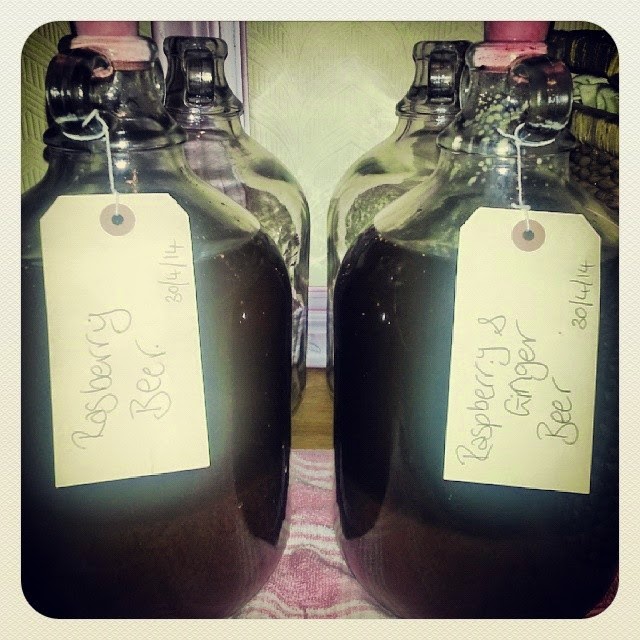
Brew 3 - Flavoured Beers. Had noticed that the brew store had flavourings that you could use in beers and i thought i could have a go at that. Make some nice light flavoured beers for the summer. These would also test out the small batch technique of using demijohns to ferment in 6l batches. This was again a full grain brew and i got Raspberry and Ginger Flavourings to make a Raspberry beer, a Ginger Beer and a Raspberry and Ginger Beer.

Mistake 3 - Tried to only use whole grains so again didn't get enough flavour from the hops to have a decent base beer for the flavourings. I also was far too stingy with the flavourings so ended up with tasteless beers.

Brew 4 - Upon learning my mistakes that my mashing technique wasn't get as much out of the grains as i would hope, i went back to using this technique only as a top up to the liquid malt extracts. To this end i decided to try another approach to making a flavoured beer. Making up my Scottish Export kit and mashing some Whisky and some Peated Malt grains to make a Whisky tinged beer. This wasn't a massive disaster however, wasn't that great either.

Mistake 4 - The added whisky and peaty flavours served to get the beer a far too smoky flavour. I also think a mistake was made at bottling with too much sugar added as the beer foams up quickly and starts flowing out the bottle upon opening.

So today, its back to basics and back to my original successful wheat beer recipe. Not tinkering - apart from one enforced ingredient change. One that could have a bit impact unfortuately - the Hefeweizen liquid yeast i used first time around was unavailable at the brew store - so i will be using a dried Bavarian Wheat beer yeast instead. Fingers crossed i have something more enjoyable to drink this time.


Monday, 7 April 2014

Greatest Singles - 2. The Aloof - Stuck On The Shelf


Today's addition to my list of favourite singles is this massive number 193 hit from 1995. Seriously this was from the massively under-rated chilled out electro album Sinking. I discovered this a few years after the fact when i was getting a little bored of the whole britpop thing and disovering more electronic music (not that i hadn't dabbled with the obvious Leftfield, The Chemical Brothers, Underworld and Prodigy in the mid 90s) and more chilled music to reflect a more subdued and less socially active time in my life.

Their song One Night Stand was on a mix tape a pen pal that i'd met through the first incarnation of social media (the nme bulletin board) and from that i bought the album where this song really stood out. It has a great mellow beat and it built nicely over its 9.50 running time.....it seemed to echo with my feeling of social isolation at the time.

Sunday, 6 April 2014

Greatest Singles - 1. Morrissey - Suedehead


This makes it onto the list by virtue of being one of the first songs that grabbed my attention as a young child and drew me away from the manufactured pop of Stock, Aitken and Waterman that was the staple of my 9/10 year old self's listening.

I first heard it when the video was on Going Live on a Saturday morning - something about the video grabbed me, it was more filmic and visually striking than the pop dross i was used to, someone telling a story to a song rather than dancing around and being endlessly chirpy. the lyrics also stuck with me as being different from what i was used to and i for some reason i loved the 'i'm so very sickened' line.

This song marked the start of where music came to be something that meant something rather than a commodity.

The whole Viva Hate album was an eye-opener for me and i took it out from the library many times. This would rank very high on my favourite singles list and i must have in my collection.

Vinyl.....my quest to start create a collection.


Over the past couple of years i've slowly gathered a small collection of 7" singles. It's been a hotch potch of buying records in charity shops and car boot sales, getting the odd new release that looks interesting, collecting Belle and Sebastian, Shrag and Manic Street Preachers records and records from the excellent Where Its At Is Where You Are (WIAIWYA) 7777777 singles club - which offers up 7 limited edition 7"singles over the course of the year.

This has been amassed as some kind of way of having some physical manifestation of my musical tastes. Digital music is all very well and good but it is strange having all that music and not having anything to show for it - i missed that old days of having a record, cassette or CD and a sleeve to look at and read. To redress the balance i've chosen to collect 7" singles.

It had to be vinyl because it's a collection thats meant to act as an antithesis to the digital age of music and cassette and cd are both still digital music albeit it on a physical format. Vinyl is analogue - the sound is physically imprinted on it in the form of grooves. Ths gives it a different sound you don't get on an audio file.

Why singles? Well, a combination of factors. The size is more space effective for a large collection, the artwork can be quite cool and it can be a cheaper product to get and there's more to get for each artist than just concentrating on albums. Also it's a way to document great songs.

This leads me to my latest idea - which is to make a list of the most important songs to me, from the various stages of my life. Songs that have caught my ear, or spoke to me in some form. The idea is to then try and obtain all these songs on 7" singles as a document of my life and its many ups and downs.

As i make the list i'll be blogging about each choice, one per day for the forseeable future.


Thursday, 13 March 2014

Home Brew - the difficult second brew (this time theres no kit)

Okay so I've talked you through my first brew from a kit, now onto a brew from scratch. I don't have a mash tun and i don't have the room to acquire one to do a full mash brew - though i was able to improvise and do a part mash brew and make the first step towards my dream of making the perfect German style Weiss bier (or hefeweizen). I took my queue from a recipe in a brewing book i have and ill take you step by step how i went through the recipe to produce my brew.

Step 1 - Heat 3 litres of water to 75 degrees Celsius. Then add the Vienna Malt Grains (1.5kg) and the gypsum. I used my wife's Jam making pan which has a large capacity for such an occasion and a sugar thermometer that hung over the edge of the pan would allow me to keep an eye on the temperature of the water so I'd know when to add the grains.

Step 2 - Then bring the temperature of the grain and waters mixture down to 65 degrees Celsius. I found that putting the pan on the smallest ring at the lowest setting on the ring kept it at a nice steady 65 degrees.

Step 3 - Mash the liquid for an hour. I have no idea what happens in a mash tun
but i assumed that keeping the temperature of the mixture for an hour at 65 degrees and covered would do the trick. I found that our largest frying pan would act perfectly as a lid for the pan.

Step 4 - Strain out the grains, pouring the water into a second pot. I achieved this by pouring from the pot through a sieve into the fermenting tub as a temporary storage.

Step 5 - Heat 2 litres of water to 75 degrees and rinses the grains with it. I just boiled my kettle with 2 litres of water in it and after letting go a little bit of the boil, i poured the contents through the grains in the sieve into the liquid already in the fermenting tub.

Step 6 - Add the malt extracts (1.5kg Amber Malt and 1.5kg Wheat Malt) and Hallertauer Hops to the water and boil for 30 mins. I basically cleaned out my jam pot and poured the liquid (wort) from my fermenting tub back into it. Then as with my kit i warmed my cans of malt extract in warm water before opening and pouring the contents into the liquid and measured 42g of my hops on my scales and added, and after raising the temperature of the liquid to a rolling boil before setting a timer for 30mins.

Step 7 - 28 mins into the boil add the Chinook hops (9g)  As above just weighed 9g of hops on my scales before adding to the pot.

Step 8 - Put 8 litres of water into your fermenter and add the hot wort. Top up the water so the volume reaches 23 litres. This is straight forward, there are markings all the way up the fermenting tub to show what the volume is.

Step 9 - when the wort temperature reaches is 25-27 degrees Celsius, pitch the yeast. Cover the mixture and attach the airlock the airlock. The temperature could again be gauged using the sugar thermometer. Pitching the yeast is really just a fancy term for adding it to the mixture. I used a liquid Hefeweizen yeast - this comes chilled and it needs to be removed from the fridge 3 hours or so before adding so it can get up to temperature. The airlock works just by half filling with water and placing in the hole in the lid of the fermenting tub. This shows you the activity in the tub without having to open he lid as bubbles appear to indicate how much fermentation is going on below - no activity means fermentation is over.

Step 10 - Ferment for at least 10 days before transferring and conditioning. I decided to do a secondary fermentation in my barrel after 10 days and then bottle condition. I'm experimenting with bottle conditioning and did my first batch after 4 days in the barrel - 14 days after brew day. This involved adding a little sugar to each bottle before filling with beer from the barrel. Doing it this way should mean i get maximum carbonation rather than losing most of it while bottling as i did with my first brew. I shall do another batch 3 weeks after brew day and then a last batch 4 weeks after brew day. This should determine the optimum fermentation time for the future. The beer will be bottled for at least 2 weeks before drinking.

Early indications from appearance and aroma are that it has all the characteristics of a Weiss bier - which is very encouraging.